
Digestive health is a very important part of your overall well-being, so it’s important to know why your stomach or intestines may be hurting. In the past, determining what was wrong inside your gut was often difficult. Doctors had to use uncomfortable methods to see inside your body. Sometimes, they even had to perform surgery just to look around. However, today, doctors use advanced new tools to see inside the digestive tract. These innovative methods are highly effective and much easier on your body.
If you live in or around Denver, CO, you don’t have to travel far for top-quality digestive care. Rocky Mountain Gastroenterology Associates is your local expert, offering capsule endoscopy procedures and other minimally invasive tests to examine your gut health.
What Is Capsule Endoscopy?
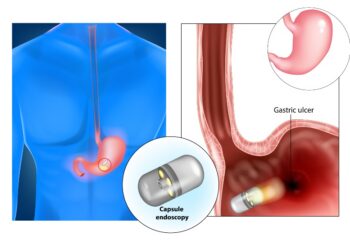
It’s reasonable to wonder how a doctor can see deep inside your belly without making a cut. The answer is a tiny device called an endoscopic capsule, essentially a camera hidden inside a pill. About the size of a large vitamin, the pill has a smooth coating that makes it easy to swallow. Inside this small shell, there’s a tiny camera, a light, a battery, and a radio transmitter.
When you swallow the endoscopy pill, it travels through your digestive system just like food does. As it moves, the light flashes, and the camera captures thousands of clear color images of the inside of your gut. These pictures help your doctor see parts of your intestines that are normally very challenging to reach.
How Capsule Endoscopy Works: Step by Step
The process of using an endoscopy capsule is simple. Here’s what you can expect to happen:
- Preparation – Your stomach and intestines must be empty so that the camera can take clear pictures. Your doctor will ask you to stop eating and drinking for a specified period before the test. You might also need to drink a special liquid to clean out your system.
- Equipment Setup – When you arrive at the clinic, a nurse will place special sticky patches on your belly. These patches have sensors inside them. The nurse will also give you a special recording belt to wear around your waist.
- Swallowing the Pill – You’ll swallow the endoscopy pill with a small glass of water. It feels just like swallowing a normal pill.
- Journey – You can leave the clinic and go about your normal day. As the pill moves naturally through your stomach and intestines, it sends pictures to the recording belt you’re wearing.
- Finishing the Test – The test usually takes about eight hours. After it’s done, you’ll return the recording belt to your doctor.
- Passing the Pill – You don’t need to retrieve the pill. It will pass safely in your stool when you go to the bathroom. You can then flush it down the toilet.
Conditions Diagnosed With Capsule Endoscopy
This tiny camera is incredibly helpful for finding hidden medical problems. Doctors use it to look at the small intestine, which is very long and loops around many times, making it hard to examine with other tools. Here are some common conditions doctors look for with an endoscopy pill.
- Unexplained Bleeding – Sometimes people lose blood inside their digestive tract, but doctors cannot find the cause using typical tests. The pill can spot tiny bleeding blood vessels.
- Crohn’s Disease – This is an illness that causes swelling and irritation in the digestive tract. The camera can take pictures of the swelling.
- Celiac Disease – This condition happens when eating gluten damages the small intestine. The pill can show this damage clearly.
- Tumors and Polyps – The camera can spot strange growths or small lumps inside the small intestine.
- Ulcers – An ulcer is a sore on the lining of your gut. The pill can find ulcers that might be causing pain or bleeding.
Capsule Endoscopy vs. Traditional Endoscopy and Colonoscopy
It’s helpful to understand how the pill camera compares to older tests. A traditional upper endoscopy uses a long, flexible tube with a camera on the end. The doctor guides this tube down your throat to look at your stomach. A colonoscopy uses a similar tube inserted through the anus to look at your large intestine.
These traditional tests are very good at what they do. However, the tubes can only reach so far. The small intestine sits right in the middle, between the stomach and the large intestine. Traditional tubes have difficulty reaching the middle of the small intestine.
The endoscopy pill easily travels through the entire small intestine. It fills the gap left by traditional tests. Also, traditional tests usually require sedation. You can stay completely awake and comfortable during a capsule endoscopy.
Advances in Endoscopy Technology
Medical tools are constantly evolving, and the field of endoscopy technology is growing fast. The cameras inside the pills are now taking sharper, brighter pictures than ever before. The batteries also last longer, ensuring the camera doesn’t die before the test is complete.
Furthermore, doctors are using sophisticated computer programs to analyze the thousands of pictures each pill captures. These programs act as a second pair of eyes. They can highlight suspicious areas to ensure the doctor doesn’t miss any details.
We also see huge leaps in other scoping tools across the medical field. For example, brain doctors use a tool called a ventriculoscope to look inside the fluid spaces of the brain. While a ventriculoscope is used for the head and not the stomach, it shows how the idea of using tiny cameras on thin tools is changing all types of medicine. In the gut, thinner, smarter tools mean better care for you.
Other Minimally Invasive Gut Imaging Options
The pill camera is not the only new tool doctors have. There are several other ways to see inside your belly without making a large cut.
- Virtual Colonoscopy – This test uses a special CT scanner that takes many X-ray images of your belly from different angles. A computer combines these images to create a 3D model of your large intestine. It’s much faster than a regular colonoscopy.
- MRI Enterography – This test uses strong magnets and radio waves to take highly detailed pictures of your small intestine. There’s no radiation involved. It’s very good at showing areas of swelling and irritation.
- Targeted Ultrasounds – A doctor places a wand on your skin to send sound waves into your body. These sound waves bounce back, creating an image of your internal organs on a screen.
Benefits of Minimally Invasive GI Imaging
Choosing a minimally invasive test comes with many benefits, the most significant of which is comfort. Nobody likes to feel pain at the doctor’s office. Tests like the pill camera are designed to be as gentle as possible.
Another advantage is the low risk of problems. Traditional surgery carries risks like infections or bad reactions to heavy sleep medicine. Because you swallow the camera like a vitamin, these risks disappear.
You also save a lot of time. You don’t need to take a full day off work to recover. You swallow the pill, put on a belt, and go back to your daily routine while the camera does its work inside of you.
Limitations of Capsule Endoscopy
While this technology is fantastic, it’s not perfect for every situation. There are a few things the endoscopy pill cannot do.
First, it can only look. If your doctor sees a polyp during a traditional colonoscopy, they can pass a tiny tool through the tube to remove it right then. If the endoscopy capsule sees a polyp, it cannot remove it. It also cannot take a tissue sample. If the pill finds a problem, you might still need a traditional test to fix it.
Second, there’s a very small risk that the capsule could get stuck. If you have a narrow spot or a blockage in your intestines, the pill might not be able to pass through. Your doctor will ask about your medical history to ensure this test is safe for you.
FAQ About Capsule Endoscopy
Does Swallowing the Capsule Hurt?
No. The capsule is completely smooth and about the size of a large vitamin. If you can swallow a normal pill with water, you can easily swallow this camera.
Can I Feel the Camera Moving Inside Me?
No. Your stomach and intestines don’t have the type of nerves that would allow you to feel the small capsule moving.
How Long Does the Whole Test Take?
The camera will record pictures for about eight hours. You’ll wear the recording belt for this entire time.
What Happens If I Accidentally Flush the Pill Down the Toilet?
This is exactly what you’re supposed to do. The capsule is disposable and safe to flush. You don’t need to bring it back to our clinic.
Can I Eat During the Test?
Your doctor will give you specific rules. Usually, you must wait a few hours after swallowing the pill before you can drink clear liquids. You may be able to eat a light meal a few hours after that.
What to Expect at Rocky Mountain Gastroenterology Associates
Rocky Mountain Gastroenterology Associates offers the highest level of care every time you visit one of our clinics. We’ll explain your test in simple terms and ensure you know how the equipment works. After your test is complete, our doctors will review your results and look for any signs of trouble. If we find a problem, we’ll help you create a step-by-step treatment plan so that you can get back to feeling your best.
Contact Us in Denver, CO, Today
You don’t have to live with stomach pain or digestive problems. The answers you need might be as simple as swallowing a tiny, high-tech endoscopic capsule. Contact us in Denver or the surrounding area today to discuss your options and schedule an appointment.
Go back